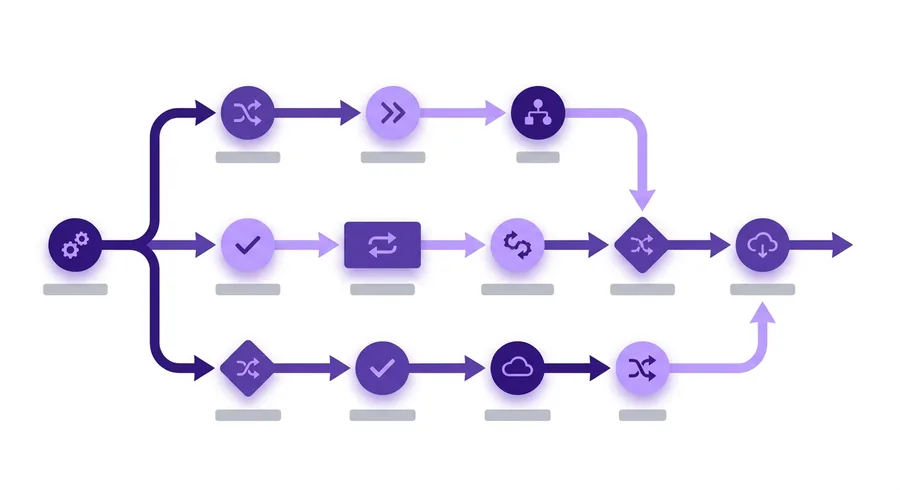
Plus the analytics, reporting and data infrastructure underneath them. Most engagements touch more than one.
We map how a process actually runs, remove steps that no longer serve a purpose, and automate what is left. Typical work: manual handoffs between systems, scheduled jobs that move and reconcile data, approval and reporting workflows that currently depend on someone remembering to run them.
Internal tools, integrations between systems that were not designed to talk to each other, and applications built for a workflow no off-the-shelf product covers. Delivered in your accounts and documented, so your team can maintain and extend it.
LLM systems connected to your own data, so people can ask questions in plain language and get an answer with the query behind it. Automated pipelines that surface anomalies, generate scheduled digests, and remove recurring reporting work.
Canonical metric definitions, documented and wired into your reporting layer so teams are working from the same numbers. Underneath that, the data layer itself: dbt models, ETL pipelines and warehouse architecture, tested and documented.
The practical ones, answered before you have to ask.
Describe the situation in your own words, in as much or as little detail as you have.